

How Do You Calculate a Company’s Equity?

They represent returns on total stockholders’ equity reinvested back into the company. ROE tells you how effectively a company is using shareholders’ equity to generate profits. Instead, investors should look at other financial indicators and consider the company’s debt exposure Retail Accounting to build a better picture of the company’s financial strength. Return on Equity (ROE) speaks to how effectively your company generates profit from its shareholders’ investment.
What are the key points to remember about Shareholder Equity?

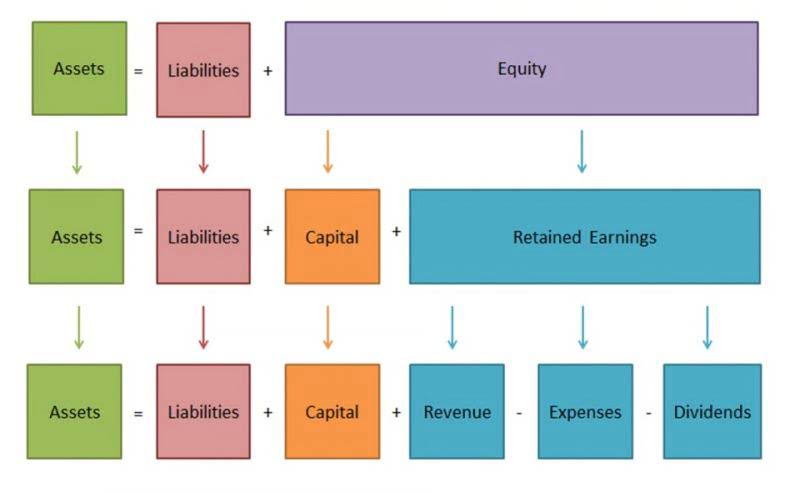
In this stockholders equity formula article, we’ll explore the importance of Return on Equity, how to calculate and interpret it, and the limitations of ROE as a financial measurement. As a result, as of March 31, 20XX, ABC Ltd’s stockholders’ equity was $140,000. Utilizing the Accounting Equation or Balance Sheet Equation is the first method for calculating owner’s equity. But an important distinction is that the decline in equity value occurs due to the “book value of equity”, rather than the market value. However, the issuance price of equity typically exceeds the par value, often by a substantial margin. Therefore, the stockholder’s equity of Apple Inc. has declined from $134,047 Mn as at September 30, 2017 to $107,147 Mn as at September 29, 2018.
How do trends and comparisons help in analyzing Shareholder Equity?

Typically, this comes last in the process of projecting the balance payroll sheet components. You can see the shareholder’s equity line on the balance sheet completed in the example screenshot of a financial model that is shown below. Total equity (book value) might be equivalent to total shareholder equity on a company’s balance sheet if you look at it from the standpoint of book value. When speaking of actual equity, you are effectively taking into account the whole market value of the company’s assets minus the sum of its liabilities.
Treasury Shares
Dividend distributions are deducted after adding the beginning retained earnings balance to the net income or loss to determine retained earnings. A statement of retained profits, which summarizes the changes in retained earnings for a given time period, is also kept. Retained Earnings, a.k.a., retained surplus or retention ratio, play a major role in the shareholders’ equity formula. This article explains the features, benefits, and the definition of shareholders’ equity.
- Here, we’ll assume $25,000 in new equity was raised from issuing 1,000 shares at $25.00 per share, but at a par value of $1.00.
- You can check the shareholders’ equity figure by scanning the balance sheet of the concerned company.
- For example, if the assets are liquidated in a negative shareholder equity situation, all assets will be insufficient to pay all of the debt, and shareholders will walk away with nothing.
- David is comprehensively experienced in many facets of financial and legal research and publishing.
Stockholders’ Equity and Retained Earnings (RE)
- This formula is known as the investor’s equation where you have to compute the share capital and then ascertain the retained earnings of the business.
- The stockholders’ equity subtotal is located in the bottom half of the balance sheet.
- Understanding shareholder equity also aids in evaluating a company’s performance over time.
- Shareholder equity is crucial as it reflects the net value of a company and indicates the financial health and stability of the business.
- Stockholders’ equity is the remaining assets available to shareholders after all liabilities are paid.
- In order to determine the equity of the shareholders, let’s use the company ABC Ltd as an example.
When an investor pays more than the stock’s face value during an IPO or Initial Public Offering, it is classified as APIC. As a result, many investors regard enterprises with negative shareholder equity as dangerous or unsafe investments. Equity held by shareholders is not a reliable indicator of a company’s financial stability. When combined with other tools and KPIs, the investor can accurately assess an organization’s health. Total assets include current and noncurrent assets such as cash, accounts receivable, inventory, property, plant, and equipment, and intangible assets.

Everything to Run Your Business
- To check a company’s retained earnings, you need to open its balance sheet or find it in a statement exclusively published for the purpose.
- Ever wondered how much cash you as a shareholder would get if a firm was dissolved, all of its assets were sold, and all debts were settled?
- Stockholders’ equity, also known as shareholders’ equity or owner’s equity, is the total amount of assets left with the company after deducting all liabilities.
- For example, the equity of a company with $1 million in assets and $500,000 in liabilities is $500,000 ($1,000,000 – $500,000).
- Investors analyze the shareholders’ equity before categorizing an investment as safe or risky.
Equity, also referred to as stockholders’ or shareholders’ equity, is the corporation’s owners’ residual claim on assets after debts have been paid. The formula for retained earnings is dependant on the net income earned by the company and the dividends the company decides to disburse to shareholders. Both these amounts depend on the company, one on its performance and one on its discretion. Retained Earnings are profits left over from the net income that is not divided as dividends among shareholders.